blog
Oldenland: A Country We Must All Learn To Navigate
Summary
In this post, the author reflects on his book Oldenland, focusing in particular on two chapters that provide powerful insights into the lives of people living with dementia.
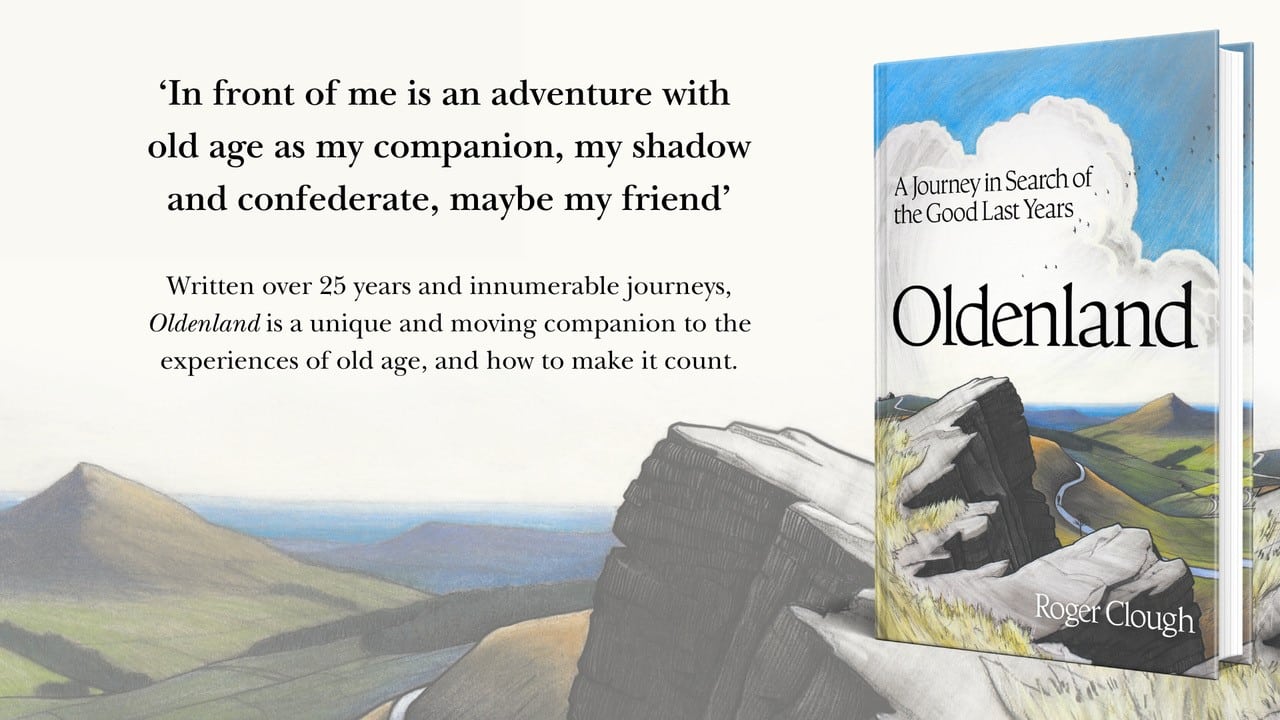
My book Oldenland - A Journey in Search of the Good Last Years was published in April. In the book I reflect on my developing understanding of old age following a lifetime of research and teaching, on the last years of my father’s life - he died in 2010 aged 101 - and now, turned 83, on my own ageing and living with frailty.
There are two chapters that I think important to our understanding of the lives of people living with dementia - Living with dementia and My fellow Oldenlanders. I reflect on what I have learnt from the people I have met who live with dementia or live alongside those living with dementia, on the reality of their lives, on the fact that whether or not we are living with dementia, we are ‘still me’ and, for couples, ‘still us’. I stress the point that there are not two separate worlds, those of us living with dementia and those who do not. I write from a perspective of trying to understand the worlds of those who live with dementia, and those who live alongside them, not as an expert in dementia studies.
I describe my work with The Dukes Theatre in Lancaster which developed from a finding from my research that people living with dementia and their family members tended to stop going out together either because of anxiety about how they would be received, or worry about the behaviour of the person living with dementia and how they would cope. We developed film shows that were adapted to suit people living with dementia and their family members, though were open to the general public as well: there were refreshments available before the show, background music cut out, additional volunteers who would guide and support, clear signs on lavatories to make destinations more obvious than the artistic designs. We introduced an interval to give people a break from sitting for too long, and I had the idea of having music and songs in the interval. A pianist played on stage, sang songs with the words on a screen, and the audience was invited to join in.
The films we chose to show often were musicals, so the singing included songs from the shows. In one interval an older man came on to sing “It had to be you” which he did word, and tune perfect, and it was only afterwards I learnt that he was living with dementia and his wife was in the audience, she no doubt with tears in her eyes as was I. The work at The Dukes was highlighted in an article I wrote for The Guardian, in a Woman’s Hour programme with Jenni Murray, and was copied in other theatres around the country.
In the book too I describe my venture in old age into singing. I live in a retirement village and there is a singing group here. My father was a Methodist minister, so I have a background in hymns that resonate with me through my life. But I also have an experience of being told that I can’t sing in tune - aged 9 or 10, son of the manse, I was inveigled into joining a junior choir. “Someone is out of tune”, the choirmaster said, and in turn we had to sing out until, inevitably, I was revealed as the culprit. I never went back. In the book I describe the invitation from the person who leads our group for anyone from the village to join the group. ‘Not me’ with my musical talent - but she insisted that she meant anyone, a friend pursued me as to why I hadn’t turned up to a session, and, as I write, ‘with trepidation in my heart and a bottle of water in my hand’, I ventured to a meeting.
It’s been wonderful, welcomed and supported by the leader and my fellows. Two people who were living with dementia have come to the group, and been supported in coming. My friends tell me I am singing better - and in spite of what I know of my inadequacies to hold a note, or at times to hit a note, I feel a part of a lovely, comradely company.
I look ahead, not knowing what life holds in store for me and my wife. I trust that whatever is to come, in some way we will find a way to live to the full, living with the reality of changes to body and mind, but steadfastly holding to a belief that we are still the people we have been, and able as so many have found in harsh circumstances, to find contentment and happiness in unexpected ways. At the end of the book I write of a walk in the woods above where we live. Towards the end, nearing home, I come to a flat, wooden seat that I had passed so often. It was covered in leaves and I scraped them away to find etched into the wood the words, ‘Enjoy today’. I have walked there again today before breakfast, and pause once again to look at the message.
Oldenland: A journey in search of the good last years, by Roger Clough, is published by John Murray, ISBN 978-1-399-82268-8.
Dr Roger Clough
Dr Roger Clough held the Chair of Social Care at Lancaster University, one of the top research and teaching Social Work departments in the UK. An academic with qualifications from Cambridge, LSE and Bristol, he is an expert in residential & social care for older people, having published 8 books and numerous other articles, contributions and research papers.
He also served as a County Councillor, set up the first university-validated course for older people to train as researchers and created a programme of Creative Arts workshops and cinema screenings for people living with dementia.
He now lives with his wife, Ann, in a retirement village in the Peak District. In addition to his regular hill-walking, he runs a University of Third Age history group and since the pandemic has edited a fortnightly newsletter for residents to share memories.